

Đề cương ôn tập học kì II môn Anh văn 12 - Năm học 2018-2019 - Trường THCS&THPT Võ Nguyên Giáp
 18 trang
07/12/2025
400
18 trang
07/12/2025
400
Bạn đang xem tài liệu "Đề cương ôn tập học kì II môn Anh văn 12 - Năm học 2018-2019 - Trường THCS&THPT Võ Nguyên Giáp", để tải tài liệu gốc về máy hãy click vào nút Download ở trên.
Tóm tắt nội dung tài liệu: Đề cương ôn tập học kì II môn Anh văn 12 - Năm học 2018-2019 - Trường THCS&THPT Võ Nguyên Giáp
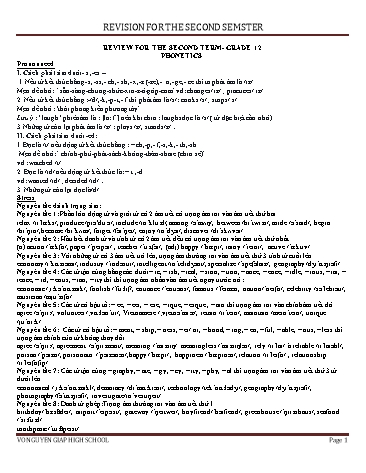
 REVISION FOR THE SECOND SEMSTER
 REVIEW FOR THE SECOND TERM- GRADE 12
 PHONETICS
Pronounced
I. Cách phát âm đuơi- s ,-es –
 1.Nếu từ kết thúc bằng- s, -ss,- ch,- sh,- x,-z (-ze),- o,- ge,- ce thì ta phát âm là /iz/
Mẹo để nhớ: "sẵn-sàng-chung-shức-xin-z-ơ-g ĩp-cơm"vd: changes/ iz/ ; practices/ iz/
2. Nếu từ kết thúc bằng :-/ð/,-k,-p- t,- f thì phát âm là /s/: cooks /s/ ; stops / s/
Mẹo để nhớ : 'thời phong kiến phương tây"
Lưu ý : ' laugh ' phiên âm là : [la: f ] nên khi chia : laughs đọc là /s/ ( từ đặc biệt cần nhớ)
3.Những từ cịn lại phát âm là /z/ : plays /z/, stands /z/
II. Cách phát âm đuơi -ed:
1.Đọc là /t/ nếu động từ kết thúc bằng : – ch,-p,- f,-s,-k,- th,-sh
 Mẹo để nhớ: " chính-phủ-phát-sách-khơng-thèm -share (chia sẻ)"
vd : watched /t/
2. Đọc là /id/ nếu động từ kết thúc là: – t ,-d
vd: wanted /id/ ; decided /id/
3. Những từ cịn lại đọc là/d/
Stress
Nguyên tắc đánh trọng âm:
Nguyên tắc 1: Phần lớn động từ và giới từ cĩ 2 âm tiết cĩ trọng âm rơi vào âm tiết thứ hai.
relax /rɪˈlỉks/, produce /prə’duːs/, include /ɪnˈkluːd/, among /əˈmʌŋ/, between /bɪˈtwiːn/, aside /əˈsaɪd/, begin
/bɪˈɡɪn/, become /bɪˈkʌm/, forget /fərˈɡet/, enjoy /ɪnˈdʒɔɪ/, discover /dɪˈskʌvər/
Nguyên tắc 2: Hầu hết danh từ và tính từ cĩ 2 âm tiết đều cĩ trọng âm rơi vào âm tiết thứ nhất.
(n) action /ˈỉkʃn/, paper /ˈpeɪpər/ , teacher /ˈtiːtʃər/, (adj) happy /ˈhỉpi/, rainy /ˈreɪni/, active /ˈỉktɪv/
Nguyên tắc 3: Với những từ cĩ 3 âm tiết trở lên, trọng âm thường rơi vào âm tiết thứ 3 tính từ cuối lên.
economy /ɪˈkɑːnəmi/, industry /ˈɪndəstri/, intelligent /ɪnˈtelɪdʒənt/, specialize /ˈspeʃəlaɪz/, geography /dʒiˈɑːɡrəfi/
Nguyên tắc 4: Các từ tận cùng bằng các đuơi – ic, – ish, – ical, – sion, – tion, – ance, – ence, – idle, – ious, – iar, –
ience, – id, – eous, – ian, – ity thì thì trọng âm nhấn vào âm tiết ngay trước nĩ :
economic /ˌiːkəˈnɑːmɪk/, foolish /ˈfuːlɪʃ/, entrance /ˈentrəns/, famous /ˈfeɪməs, nation /ˈneɪʃn/, celebrity /səˈlebrəti/,
musician /mjuˈzɪʃn/
Nguyên tắc 5: Các từ cĩ hậu tố: – ee, – eer, – ese, – ique, – esque , – ain thì trọng âm rơi vào chính âm tiết đĩ
agree /əˈɡriː/, volunteer /ˌvɑːlənˈtɪr/, Vietnamese /ˌvjetnəˈmiːz/, retain /rɪˈteɪn/, maintain /meɪnˈteɪn/, unique
/juˈniːk/
Nguyên tắc 6: Các từ cĩ hậu tố: – ment, – ship, – ness, – er/ or, – hood, – ing, – en, – ful, – able, – ous, – less thì
trọng âm chính của từ khơng thay đổi
agree /əˈɡriː/, agreement /əˈɡriːmənt/, meaning /ˈmiːnɪŋ/ meaningless /ˈmiːnɪŋləs/, rely /rɪˈlaɪ/ à reliable /rɪˈlaɪəbl/,
poison /ˈpɔɪzn/, poisonous /ˈpɔɪzənəs/,happy /ˈhỉpi/ , happiness /ˈhỉpinəs/, relation /rɪˈleɪʃn/ , relationship
/rɪˈleɪʃnʃɪp/
Nguyên tắc 7: Các từ tận cùng – graphy, – ate, – gy, – cy, – ity, – phy, – al thì trọng âm rơi vào âm tiết thứ 3 từ
dưới lên
economical /ˌiːkəˈnɑːmɪkl/, demoracy /dɪˈmɑːkrəsi/, technology /tekˈnɑːlədʒi/, geography /dʒiˈɑːɡrəfi/,
photography /fəˈtɑːɡrəfi/, investigate /ɪnˈvestɪɡeɪt/
Nguyên tắc 8: Danh từ ghép: Trọng âm thường rơi vào âm tiết thứ 1
birthday /ˈbɜːrθdeɪ/, airport /ˈerpɔːrt/, gateway /ˈɡeɪtweɪ/, boyfriend /ˈbɔɪfrend/, greenhouse /ˈɡriːnhaʊs/, seafood
/ˈsiːfuːd/
toothpaste /ˈtuːθpeɪst/
VO NGUYEN GIAP HIGH SCHOOL Page 1 REVISION FOR THE SECOND SEMSTER
 15. A. continent B. belong C. master D. access
 16. A. appalling B. ashamed C. November D. architect
 17. A. policeman B. cinema C. overcoat D. politics
 18. A. competition B. intelligent C. automation D. information
 19. A. accountant B. Arabic C. Germany D. chemistry
 20. A. attention B. interesting C. Influence D. television
 VOCABULARY
I. Mark the letter A,B,C or D on your sheet to indicate the word(s) CLOSEST in meaning to the underlined
word(s) in each of the following questions:
1. In Africa, many children die from not having enough food.
 A. poverty B. starvation C. drought D. malnutrition
2. Jack still went ahead with his ambitious plan despite the fact that it was a risky investment.
 A. unserious B. dangerous C. safe D. complex
3. Birds are at their most vulnerable when they leave their nests and find food on their own.
 A. strong B. susceptible C. powerful D. invincible
4. The regional authorities failed to provide the poor with essential services such as accommodation, fresh
water and electricity.
 A. dispensable B. trivial C. unnecessary D. vital
5. . The doctor decided to give her a thorough examination so that he could identify the causes of her illness.
 A. set up B. make out C. get over D. look up
II. Mark the letter A, B, C,
 1. After five days on trial, the court found him innocent of the crime and he was released.
 A. cheating B. innovative C. nạve D. guilty
 2. It was such a complicated task that I couldn’t do it myself.
 A. difficult B. simple C. complex D. problematic
 3. I’m in a good mood for being accepted to work for global enterprise.
A. refused B. received C. recognized D. allowed
 4. Anna volunteered to work for a charitable organization with a view to helping disabled children.
 A. poor B. mental C. normal D. handicapped
 5. At the end of the movie, the homeless family was reunited after the civil war.
 A. separated B. get-together C. joined D. meet again
 COMMUNICATION EXCHANGES
 Communication exchanges:
- Invitations and suggestions
 + Let’s
 + Why don’t you + bare inf. Ex: Let’ go to the cinema tonight
 + Shall we
 + Would you like
 + Are you free + to-inf. Ex: Would you like to play football?
 + Do you feel like + V-ing Ex: How about going out now?
 + How about
 - WH- questions and their answers Ex: - How often do you go to the concert? - Once a month.
VO NGUYEN GIAP HIGH SCHOOL Page 3 REVISION FOR THE SECOND SEMSTER
3. MUST: Được dùng để diễn tả
 - Trách nhiệm hoặc bổn phận. Must cĩ nghĩa mạnh hơn should. Với should ta cĩ một sự lựa chọn làm hoặc
 khơng làm nhưng với mustsẽ khơng cĩ sự lựa chọn.
 Ex: - An automobile must have gasoline to run.
 + mustn’t chỉ sự ngăn cấm
 Ex: You mustn’t drive on the left
4. HAVE TO
 Have to cĩ nghĩa gần như must, nhưng khơng mang tính bắt buộc mà chỉ thấy cần phải làm.
 Ex: - I need some meat. I have to go to the butcher’s.
 - Does your father have to go at once?
5. COULD/ MAY/ MIGHT + HAVE + P.P
 Hình thức này được dùng để chỉ khả năng trong quá khứ.
 Ex: It may have rained last night, but I’m not sure.
 John might have gone to the movies yesterday.
6. SHOULD + HAVE +P.P
 Hình thức này để chỉ một bổn phận, trách nhiệm được cho là xảy ra ở quá khứ, nhưng vì một lý do nào đĩ
đã khơng xảy ra.
 Ex: John should have gone to the post office this morning. (He did not go to the post office)
 Maria shouldn’t have called John last night. (she did call him)
7. MUST + HAVE + P.P: chỉ một sự suy luận hợp lý trong quá khứ.
 Jane did very well on the exam. She must have studied hard.
 Mary looks very tired. She must have stayed up late last night.
B. MODALS IN PASSIVE
 In the present: MODAL +BE + P.P
 In the past: MODAL + HAVE + BEEN + P.P
II/ SO - THEREFORE – BUT – HOWEVER:
1. SO : vì vậy ( chỉ nguyên nhân, hậu quả)
=> “So” khơng đứng đầu câu (trong văn viết), thường đứng giữa câu và trước cĩ dấu phẩy.
Ex: The rain began to fall, so we went to home.
2. THEREFORE: vì thế
=> “Therefore” đứng đầu câu, sau đĩ cĩ dấu phảy
VO NGUYEN GIAP HIGH SCHOOL Page 5 REVISION FOR THE SECOND SEMSTER
 Ex: * She is as tall as me
 S be adj pr.
 * My hands were as cold as ice.
 S + V + AS + Adv + AS + Noun/ Pronoun/ clause
 Ex: She sings as well as her sister.
 V adv N
 S + V (not)+ as/ so + adj/ adv + as + Noun/ Pronoun/ clause
 Ex: This flat is not as/ so big as our old one.
 I couldn’t run as/ so fast as him. ( as he runs )
* Notes:
 - so sánh bằng nhau hoặc như nhau cịn cĩ thể thay thế bằng cấu trúc the same as.
 S + V (not)+ the same + ( Noun ) as+ Noun/ Pronoun
 Ex: Tom is as old as Mary = Tom is the same age as Mary.
 Tom’s salary as much as Mary’s = Tom’s salary is the same as Mary’s.
 - less ..than = not as/ so ..as (kém hơn, khơng bằng)
 Ex: This dress is less expensive than that one = This dress isn’t as / so expensive as that one.
 - Khi nĩi gấp bao nhiêu lần ta dùng cấu trúc: Twice as. as; three times as.as.
 Ex: Their house is about three times as big as ours.
 Petrol is twice as expensive as it was a few years ago.
 2. So sánh hơn (comparative form)
 • Tính từ ,trạng từ ngắn (short adj, adv): là những tính từ,trạng từ cĩ 1 âm tiết hoặc những tính từ, trạng từ
 cĩ 2 âm tiết mà kết thúc bằng - er, - ow, - y, - le.
 S + V (not)+ short adj/adv + er + than + Noun/ Pronoun/ Clause
EX: She is taller than me.
 She runs faster than me.
 • Tính từ, trạng từ dài (long adj, adv): là những tính từ hoặc trạng từ cĩ từ 2 âm tiết trở lên
VO NGUYEN GIAP HIGH SCHOOL Page 7 REVISION FOR THE SECOND SEMSTER
 Ex: The bigger the room is , the better I feel.
 => THE MORE+ ADJ / ADV + S + V, THE MORE+ ADJ / ADV + S + V.
 Ex: The more polluted the water is , the more dangerous our lives become.
 => THE MORE +N + S + V, THE MORE +N + S + V.
 Ex: The more money he gets , the more food he buys.
 => THE MORE + S + V , THE MORE + S + V.
 Ex: The more I think , the more I worry.
EX: The more dangerous it is, the more I like it.
 The older I get, the happier I am.
 ➢ so sánh lũy tiến (càng ngày càng): diễn đạt sự tăng dần hoặc giảm dần 1 cách liên tục
 - er and er và more and more được dùng để diễn đạt sự tăng dần.
 S + V + short adj/ adv + er + and + short adj/ adv + er.
EX: Betty is younger and younge
 PHRASAL VERBS
1. Định nghĩa
Cụm động từ (Phrasal verbs) là sự kết hợp giữa một động từ và một từ nhỏ (particle). Từ nhỏ, particle(s), này cĩ
thể là một trạng từ (adverb), hay là một giới từ (preposition), hoặc là cả hai:
Ex: The rich man gave away most of his fortune.
( Người giàu cĩ ấy tặng hầu hết tài sản của ơng ta cho người nghèo.)
2. Cách dùng
PHRASAL VERBS CĨ THỂ ĐĨNG VAI TRỊ là:
– ngoại động từ (transitive): theo sau là một danh từ hoặc là một đại danh từ với chức năng là túc từ (object) của
động từ.
– nội động từ (intransitive): khơng cĩ túc từ theo sau.
 NỘI ĐỘNG TỪ: Intransitive phrasal verbs
– Khơng cĩ túc từ – động từ cùng particle (thường là trạng từ- adverb) luơn đi sát nhau:
Ex: The magazine Time comes out once a week.
( Báo Time được phát hành mỗi tuần một lần.)
Ex: Our car broke down and had to be towed to a garage.
( Xe chúng tơi bị hư và phải kéo về chỗ sửa.)
– Cũng như các nội động từ thường, khơng cĩ túc từ đi theo, loại phrasal verb này khơng dùng ở thể thụ động
(passive) nên bạn khơng nghe dân bản xứ nĩi “Our car was broken down”, “ The magazine Time is come out”
– Một số intransitive phrasal verbs thơng dụng: break down, come back, fall through, get by, get up, go on, grow
up, look out, show up, shut up, sit down, stand up, stay on, take off, turn up, watch out
NGOẠI ĐỘNG TỪ: Transitive phrasal verbs
Được chia làm HAI NHĨM, tùy theo vị trí của túc từ:
– NHĨM 1: cĩ thể ở giữa động từ và ‘particle’ hoặc đi sau ‘particle’:
VO NGUYEN GIAP HIGH SCHOOL Page 9
File đính kèm:
- de_cuong_on_tap_hoc_ki_ii_mon_anh_van_12_nam_hoc_2018_2019_t.doc

